Implications
Home Page

Chronology

Key Figures

Implications

What Is New

Page of Quotes

Possible Outcomes

Photo Page

Links And Bibliography

Professor Comment Page


Motivations :

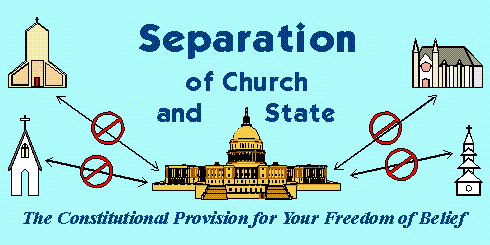
There are a number of reasons given to want a separation of church and state:

  • The rights of the minority have historically been violated by the rights of the majority. Members of a non-majority religion often find themselves persecuted, socially shunned, and harassed.
  • The church might harm the state. For example, religious conviction might cause the state to become involved in a disastrous war, or to remain pacific when force is necessary for the preservation of the state.
  • The state might harm the church. For example, the state might dictate a religious ceremony that the church's dogma declares is wrong; or, the state may force the participation of religious people in some aspect of civic life in a manner that offends their religious convictions and offends their conscience; or, the state may discriminate in favor of one church and against members of other churches.


  Interpretations :

There are different interpretations of the notion of separation of Church and State:

  • one sees this separation from a legal and financial point of view: the State should not establish nor fund religious activities;
  • another sees this separation in keeping religious beliefs out of the motivations of public policies, preventing interference from religious authorities into state affairs, and disapproving of political leaders expressing religious preferences in the course of their duties.

Enactment:

Separation of church and state occurs in different ways:

  • legal separation
  • Voluntary separation, such as by churches teaching that religious ceremony should be confined to either the church or the home.

http://www.creationists.org/churchandstate.html

Countries with stable separation.

Different countries have different approaches to the separation of church and state.

France

Since 1905, France has had a law requiring separation of church and state, prohibiting the state from recognizing or funding any religion; the French constitution; freedom of religion is a constitutional right. The 1905 law was highly controversial at the time.

United Kingdom

In the United Kingdom, there are two state-approved churches. The Presbyterian church in Scotland and the Anglican church in England.

Germany

In Germany, church and state are declared by law to be separate, but some large churches can get special status from the state as a "corporation under public law" which allows the churches to levy taxes against the members of the church in return for a collection fee paid to the state.

Sweden

The church and state were partially separated in 1999. The Church of Sweden still maintains special status. There is now possible to register new religious organizations, but they lack the same special status and the ability to perform services such as marriage and burials.

United States of America

The constitutional situation changed drastically with the passage of the Fourteenth Amendment which extended the limitations of the Bill of Rights to limit the power of state governments .In 1962, the United States Supreme Court banned from public schools all public prayers and religious readings done for religious purposes In 2002, a Court of Appeals held that a California law requiring students to recite the Pledge of Allegiance was unconstitutional; the case has since been appealed to the Supreme Court, where hearings begain in March 2004, but no decision has been issued.

http://www.bushflash.com/faith.html